
Introduction
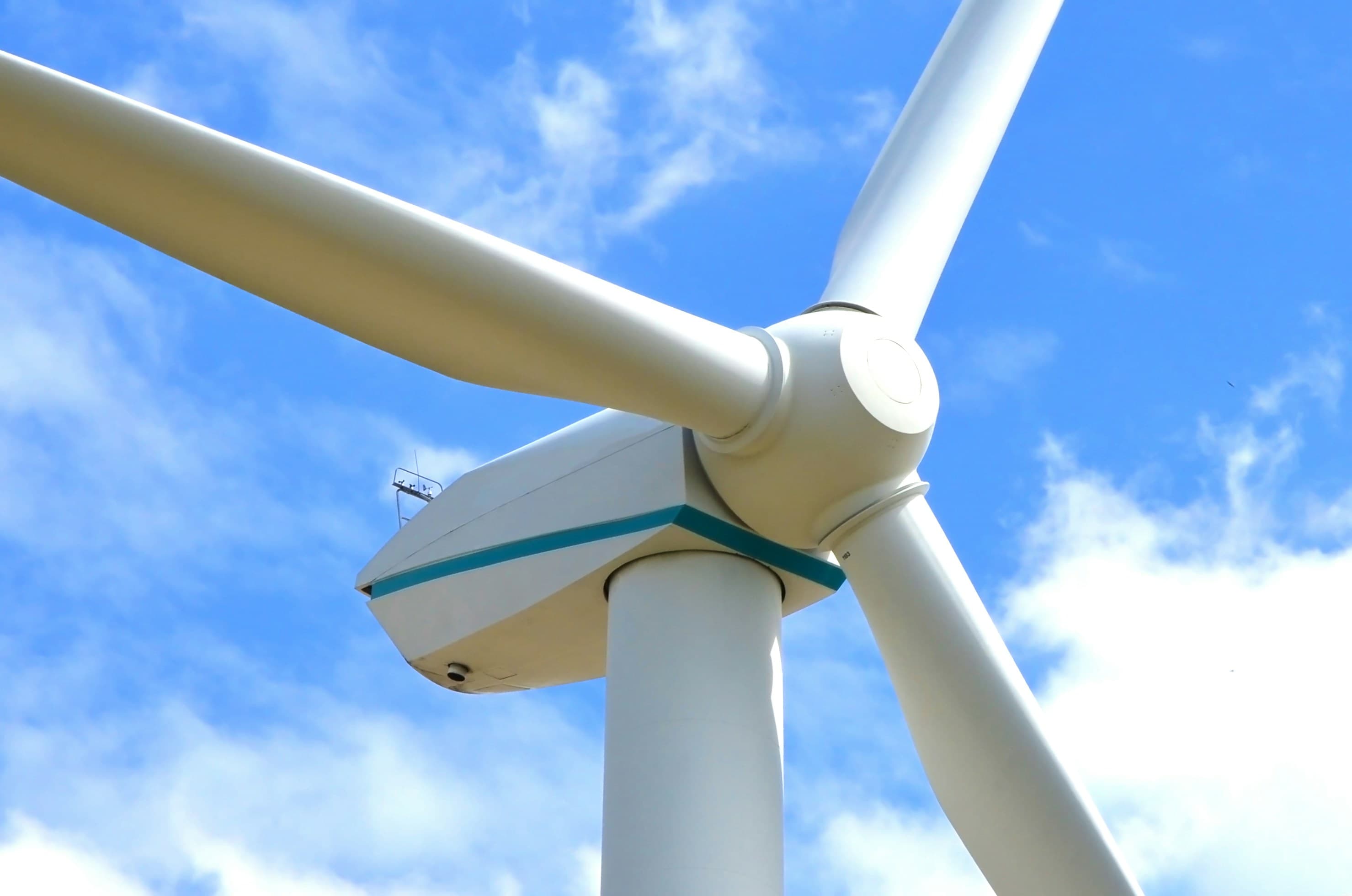
With every new technology and data source, monitoring systems for wind turbines continue to evolve. Among the most critical components for a turbine's efficiency and longevity are its blades. Constantly exposed to extreme forces such as wind loads, temperature fluctuations, and material fatigue, blade damage can lead to efficiency losses, costly repairs, or, in the worst case, complete turbine shutdowns. Despite their importance, traditional wind turbine monitoring has focused on main bearings, gearboxes, and generators, often overlooking blade health.
However, as the wind energy market grows and turbine technology advances, precise blade condition monitoring is becoming increasingly essential. Predictive maintenance that detects and addresses issues early is key to extending operational life and minimizing downtime. This is where Turbit takes the lead with its data-driven monitoring approach: By integrating additional sensor data, including Weidmüller’s BladeControl, a comprehensive monitoring system is being established. While we are not yet at Full Scale Monitoring, each additional data source and technological improvement moves us closer to that vision.
Why is Blade Monitoring Essential?
Wind turbine blades endure extreme conditions, from mechanical stress caused by wind loads to fluctuating temperatures. Damage to the blades can have severe consequences, including reduced performance and structural issues that lead to expensive repairs or complete failures. As wind turbines increase in size, the likelihood of unexpected blade failures also rises. Without precise monitoring, minor issues can go undetected and escalate into significant problems.
Blade Monitoring enables early detection of damages, facilitating targeted repairs and preventing costly downtimes. This not only saves money but also enhances overall turbine performance. Operators benefit from extended turbine lifetimes and improved maintenance planning.
The Advancement: Integrating Sensor Data for Comprehensive Monitoring
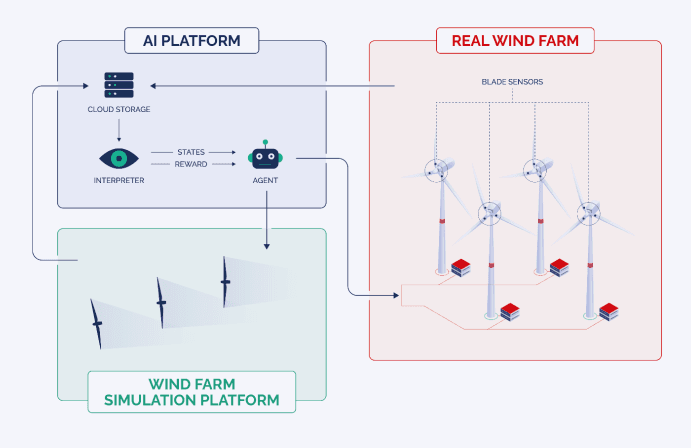
Turbit is expanding its monitoring capabilities by integrating new data sources such as Weidmüller’s BladeControl. This integration enables detailed analysis of flap and edge movements of the blades. By collecting and analyzing high-frequency sensor data, even the smallest anomalies can be detected early, an essential step towards predictive maintenance and cost reduction.
With Turbit’s Blade Monitoring, we can identify primary damages in turbine blades that often lead to severe secondary damage in the drivetrain. By addressing these issues early, we prevent costly failures and ensure more stable turbine operation. As we integrate more data sources, Turbit Intelligence continuously improves, bringing us closer to our vision of Full Scale Monitoring.
How Does Blade Monitoring Work Technically?
- Installation of sensors to measure acceleration, strain, or acoustic emissions
- Capturing frequency spectra over defined time periods
- Creating spectrograms to visualize vibration patterns
- Comparing actual data with simulations powered by neural networks to identify anomalies
Through AI-driven analytics, Turbit ensures accurate anomaly detection while minimizing false positives and false negatives. By following a strictly data-driven approach utilizing neural networks, Turbit delivers more precise and efficient fault detection than traditional methods.
Full Scale Monitoring
The concept of Full Scale Monitoring is based on integrating all critical data sources required for the operation of a wind turbine. In addition to blade monitoring, this includes gearboxes, generators, main bearings, and other key components. Utilizing various sensor types and AI-driven analysis creates a holistic view of the turbine’s health. The more comprehensive the monitoring, the better potential faults can be predicted, and maintenance strategies optimized.
Another advantage is the reduction of false alarms. While conventional monitoring systems often generate inaccurate or contradictory alerts, the combination of SCADA and high-frequency sensor data allows for more refined analysis. This prevents unnecessary maintenance actions and maximizes operational efficiency.
Conclusion
The more relevant data we integrate into monitoring, the earlier anomalies can be detected and damages prevented. Expanding from SCADA-based monitoring to Full Scale Monitoring with blade data is a crucial step toward reducing unexpected failures. While Full Scale Monitoring remains a long-term goal, each new data source helps refine our AI and improve Turbit's predictive accuracy. Through this iterative process, we are setting new standards in wind turbine monitoring, enhancing efficiency, reducing maintenance costs, and driving a more sustainable energy future. Ultimately, our approach brings us closer to lower risk operations, ensuring maximum reliability and performance for wind farms worldwide.
Dr. Richard Kunert, Head of Data Science at Turbit, emphasizes: "By continuously incorporating new data sources, we enhance the predictive capabilities of our AI models. Blade monitoring is a fundamental step towards achieving full-scale monitoring and zero-risk operations, as it allows us to detect potential failures earlier and with greater precision."